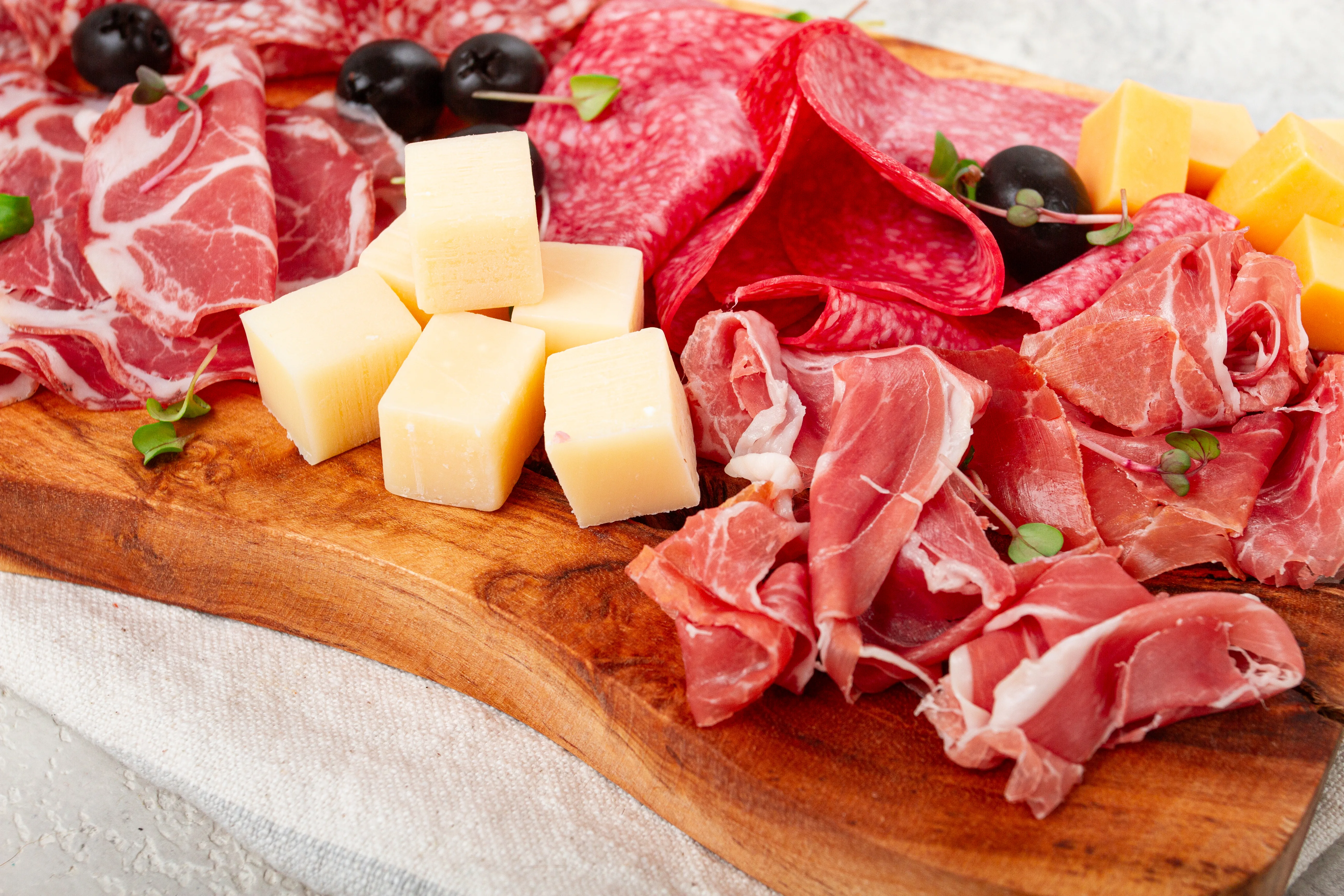
Ask anyone who grew up in an Italian family and they’ll tell you the real party happens before dinner. It’s the hour when people are still coming through the door, someone’s opening a bottle of wine, and there’s a board of cheese and salami on the counter that everybody keeps picking at.
That’s antipasti. And the good news for anyone hosting is that it’s one of the easiest ways to feed a crowd. You don’t need to cook much. You just need quality ingredients and a little bit of a plan. Our recommendation? Start with a tray of crostini, add a cheese and salami board, and finish with some really good olive oil.
Start with crostini
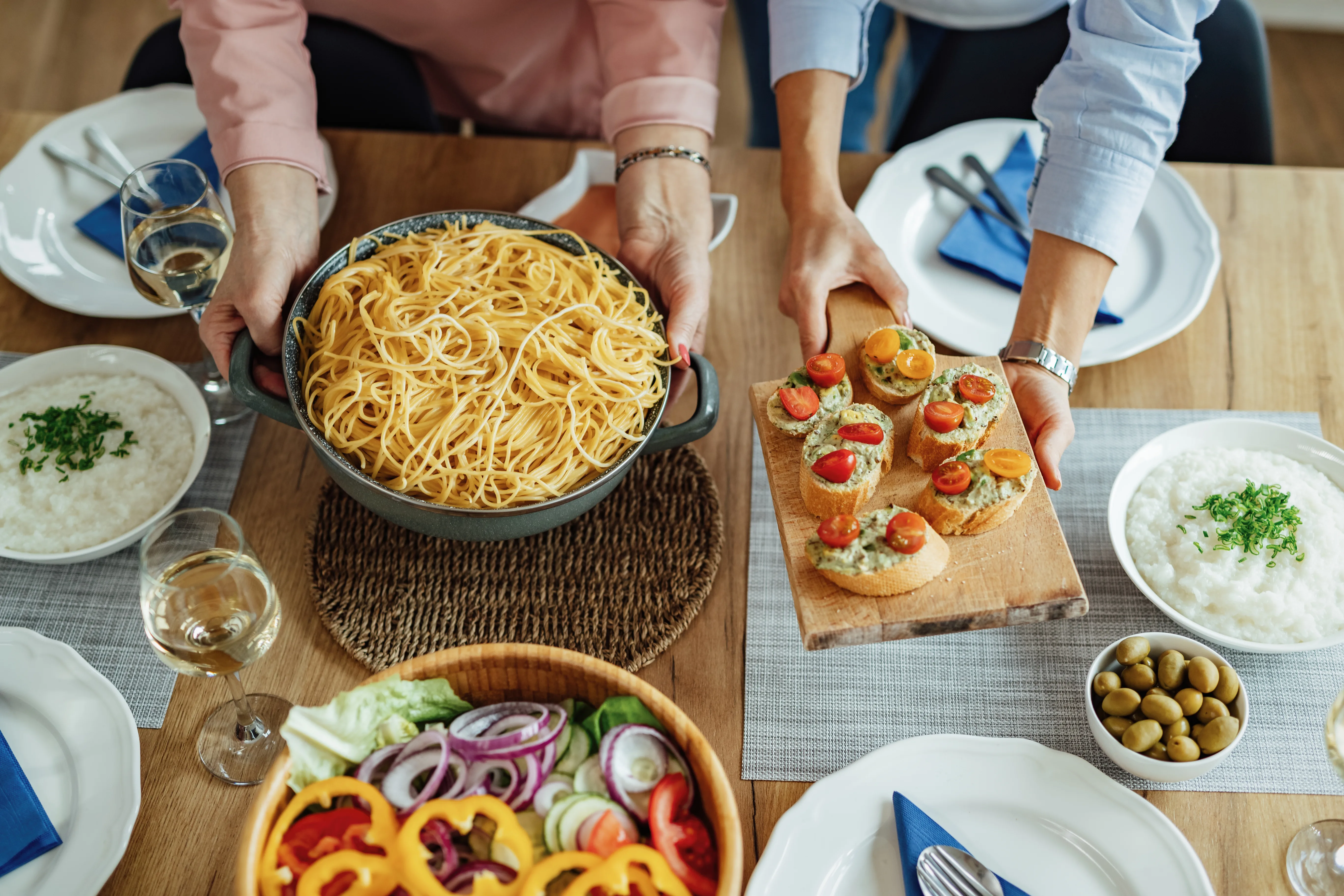
If you only make one thing, make crostini. They’re just little toasts, but people love them, and you can get the bread part done days ahead.
Grab a baguette or a loaf of ciabatta and cut it into slices about half an inch thick. Brush them with olive oil and bake at 400°F for 8 to 10 minutes, until they’re golden at the edges. If you want to do it the way our nonnas did, rub a cut garlic clove over each one while they’re still warm. Once they cool, they’ll keep in a sealed container for a couple of days.
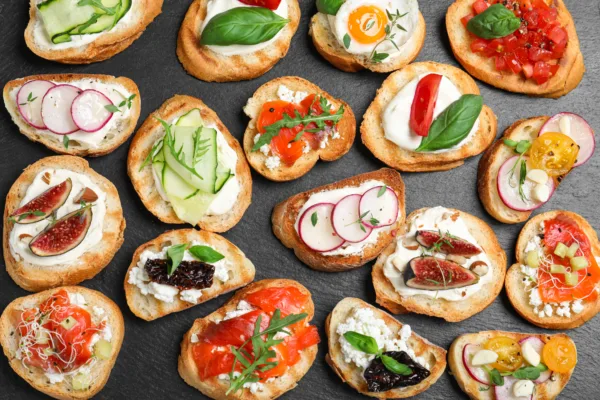
Then comes the fun part. A few of our favorite toppings:
- Ricotta with a slice of fresh fig (or a spoonful of fig jam), a little honey and some cracked black pepper. This one disappears first, every time.
- Ricotta and prosciutto with a couple of arugula leaves on top.
- Gorgonzola and thin slices of pear. Add toasted walnuts if you have them.
- Burrata, roasted cherry tomatoes and basil, with a pinch of flaky salt.
- Mortadella folded over a smear of ricotta, finished with chopped pistachios.
- For the people who like it spicy: a thin layer of ‘nduja, then ricotta, then honey.
One thing we’ve learned the hard way: don’t top them too early. Assemble them shortly before guests arrive so the bread stays crisp. Even easier, put out the toasts and toppings in bowls and let everyone build their own.
Build a cheese and salami board
We get asked about boards a lot at the deli counter, and our answer is usually the same: keep it simple. Three cheeses and two or three meats are plenty. If dinner’s coming after, figure on 2 to 3 ounces of cheese and about 2 ounces of meat per person.
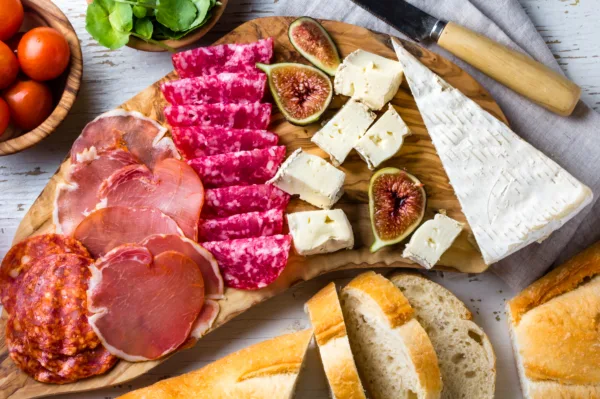
For the cheeses, we like to start with a wedge of Parmigiano Reggiano. Don’t slice it. Use the tip of a knife to break off rough chunks, the traditional Italian way of serving it that highlights its natural texture.
Next, Gorgonzola, which comes in two varieties: dolce and piccante. The dolce is soft and creamy, spreading on bread like butter, while the piccante is firmer and has more bite.
Then, Pecorino, a cheese made from sheep’s milk that comes in several varieties. Romano is sharp and salty, while Toscano is milder and slightly sweet. For something softer, fresh mozzarella or burrata is always a good addition.
On the meat side, prosciutto is a must. Fold it loosely instead of laying it flat so it’s easy to pick up. Add a salami or two (Genoa is a classic, finocchiona has a nice fennel flavor, and soppressata brings some heat), and if there’s room, a few slices of mortadella or coppa.
After that, fill in the empty spots with whatever you like. Castelvetrano olives, marinated artichokes, roasted peppers, breadsticks, a little dish of honey or fig jam, some nuts, a bunch of grapes.
Pro Tip: Take the cheese out of the fridge 30 minutes to an hour before people show up. Cold cheese doesn’t have nearly as much flavor. At room temperature, it softens up, and you can actually taste everything that makes a good Parmigiano or Gorgonzola special.
Don’t forget the olive oil!
This is the part people skip, and it’s a shame, because a good olive oil can make a plain piece of bread taste like something special. When you’re shopping, check that it says extra virgin, look for a harvest date on the label, and pick one in a dark bottle.
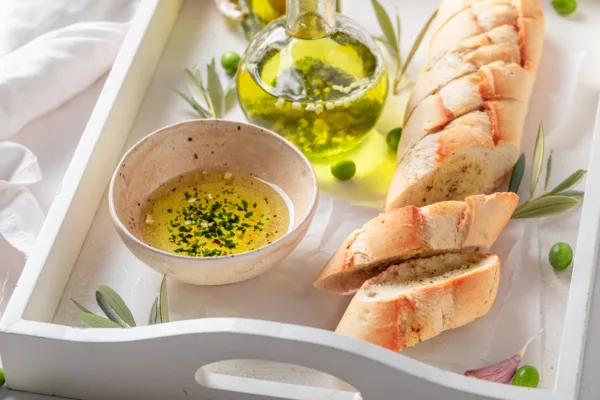
The easiest way to serve it is the simplest. Pour some into a shallow bowl, sprinkle in a little sea salt and black pepper, and set it next to a basket of warm ciabatta or focaccia. A bold, peppery oil works best here.
It’s also great drizzled right over your board. A mild, buttery oil is lovely on burrata or ricotta because it doesn’t overpower them. Something stronger and grassier can hold its own next to Parmigiano or Pecorino. And if you lay out some prosciutto on a plate with arugula, a few shavings of Parm and a swirl of oil, you’ve basically got a second appetizer for free.
If you really want to impress, set out two or three different oils with some cubes of bread and let people taste them side by side. They’re more different than most people expect. A Ligurian oil made from Taggiasca olives is soft and almost sweet. Sicilian oils made from Nocellara del Belice olives are fruity, with a hint of green tomato. Puglian Coratina is the opposite, intense and peppery enough to make you cough a little (that’s a good sign, by the way). Write the name and region on a little card next to each one and watch your guests start comparing notes.
One more thing worth looking for during the holidays is olio nuovo, the “new oil” from the fall harvest. Freshly pressed and full of vibrant, grassy flavor, it’s a seasonal favorite that’s especially good with warm bread. It’s only around for a few months, so it makes a nice holiday treat.
Stop by Doris and we’ll help you put out a spread your guests won’t forget
If you need a hand putting it together, come by Doris. We’ll slice your prosciutto fresh, help you pick the cheeses, and point you toward an olive oil or two worth trying. Buon appetito, and happy holidays from all of us.